




Table of Contents
- What Is IRA Approved Silver?
- IRS Fineness Requirements (0.999 Rule)
- Approved Manufacturers & Government Mints
- IRA-Eligible Silver Coins
- IRA-Eligible Silver Bars
- Silver Rounds: IRA Eligibility Rules
- What Silver Does NOT Qualify for an IRA
- Storage Rules: IRS-Approved Depositories
- How to Open a Silver IRA (Rollover Guide)
- Silver IRA Fees: Custodian, Storage & Dealer
- Tax Implications: Traditional vs. Roth Silver IRA
- Building a Balanced Precious Metals Portfolio
- Compliance Checklist & Documentation
- Top-Rated Silver IRA Custodians 2026
- Key Takeaways

What Is IRA Approved Silver?
IRA-approved silver is physical silver that meets IRS fineness, manufacturer, and storage requirements under IRC §408(m)(3) for inclusion in a self-directed IRA. ira approved silver The Internal Revenue Code distinguishes between permissible bullion and prohibited collectibles — a distinction that determines whether silver can legally be held inside a retirement account.
Under IRC §408(m)(3)(B), silver bullion must satisfy three conditions simultaneously: (1) minimum fineness of 0.999 (99.9% pure), (2) production by a national government mint or a refiner/assayer accredited by NYMEX, COMEX, the London Bullion Market Association (LBMA), or an ISO 9000-certified facility, and (3) physical custody by an IRS-approved depository under the control of a qualified IRA custodian — not the account holder. what is ira eligible silver Failing any one of these conditions renders the silver ineligible and could trigger a prohibited transaction under IRC §4975, resulting in the entire IRA balance being treated as a taxable distribution.
The American Silver Eagle qualifies under a unique statutory carve-out — IRC §408(m)(3)(A) names it as the only silver coin automatically IRA-eligible regardless of the general fineness rule, although it does meet the 0.999 standard. All other silver products must satisfy the three-part test above.
How Does IRA Silver Work?
A silver IRA is a self-directed individual retirement account (SDIRA) that holds physical silver. You work with a specialized IRA custodian who purchases IRS-eligible silver on your behalf and arranges storage at an approved depository. You own the silver inside the account and it grows tax-deferred (traditional IRA) or tax-free (Roth IRA). You cannot personally handle the silver while it remains inside the IRA.
IRS Fineness Requirements for Silver and All Precious Metals
The IRS requires silver held in an IRA to meet a minimum fineness of 0.999 (99.9% pure), as codified in IRC §408(m)(3). ira approved silver This threshold is stricter than gold's requirement but more accessible than platinum and palladium standards.
Under IRC §408(m)(3), the IRS sets minimum fineness thresholds for each precious metal allowed in a self-directed IRA:
| Metal | IRS Minimum Fineness | Common Standard | Example Qualifying Products |
|---|---|---|---|
| Silver | 0.999 (99.9%) | 0.999 | American Silver Eagle, Canadian Maple Leaf |
| Gold | 0.995 (99.5%) | 0.9999 | American Gold Eagle (exception), Gold Maple Leaf |
| Platinum | 0.9995 (99.95%) | 0.9995 | American Platinum Eagle |
| Palladium | 0.9995 (99.95%) | 0.9995 | Canadian Palladium Maple Leaf |
Silver's 0.999 threshold is stricter than gold's but more accessible than platinum and palladium. ira approved silver Products that fall below these thresholds — including sterling silver (0.925), coin silver (0.900), and silver-plated items — are categorically ineligible regardless of their market value or collectible status.

Approved Manufacturers and Government Mints
Only silver produced by an approved manufacturer or a national government mint qualifies for IRA inclusion under IRS rules. ira approved silver Approved manufacturers are refiners and assayers accredited by one or more of the following industry bodies:
- LBMA (London Bullion Market Association) — The global standard for precious metals quality. LBMA Good Delivery accreditation requires refiners to meet strict purity, weight tolerance, and marking standards.
- COMEX/NYMEX — Commodity exchanges that maintain approved refiner lists for deliverable metals.
- ISO 9000 certified facilities — International quality management certification.
Major Approved Refiners and Mints
The following refiners and mints produce silver products widely accepted by IRA custodians across the United States:
- United States Mint — American Silver Eagles (bullion and proof)
- Royal Canadian Mint — Canadian Silver Maple Leaf (0.9999 fineness)
- Austrian Mint — Silver Philharmonic
- Perth Mint (Australia) — Silver Kangaroo, Silver Kookaburra
- Royal Mint (United Kingdom) — Silver Britannia
- PAMP Suisse — Silver bars with Veriscan technology
- Johnson Matthey — Silver bars (hallmarked, serialized)
- Engelhard — Legacy silver bars (still accepted by most custodians)
- Sunshine Minting — Silver bars and rounds with MintMark SI security feature
- Valcambi Suisse — Silver bars (LBMA Good Delivery)
Before purchasing any silver product for your SDIRA, verify that the specific item appears on your custodian's approved product list. Custodians may maintain narrower lists than what the IRS technically permits.
IRA-Eligible Silver Coins
The American Silver Eagle, Canadian Silver Maple Leaf, and Austrian Silver Philharmonic are the most widely accepted IRA-eligible silver coins across U.S. custodians. Each is produced by a national government mint and meets or exceeds the IRS 0.999 fineness requirement.
| Coin | Mint | Fineness | Weight | IRA Eligible? |
|---|---|---|---|---|
| American Silver Eagle | U.S. Mint | 0.999 | 1 oz | YES |
| Canadian Silver Maple Leaf | Royal Canadian Mint | 0.9999 | 1 oz | YES |
| Austrian Silver Philharmonic | Austrian Mint | 0.999 | 1 oz | YES |
| Australian Silver Kangaroo | Perth Mint | 0.9999 | 1 oz | YES |
| British Silver Britannia | Royal Mint (UK) | 0.999 | 1 oz | YES |
| Mexican Silver Libertad | Casa de Moneda | 0.999 | 1 oz | YES |
Proof American Silver Eagles retain IRA eligibility only when the owner stores them in the original U.S. Mint packaging with the certificate of authenticity intact. Uncertified proof coins or coins that have been removed from original packaging may lose eligibility depending on custodian policy.
IRA-Eligible Silver Bars
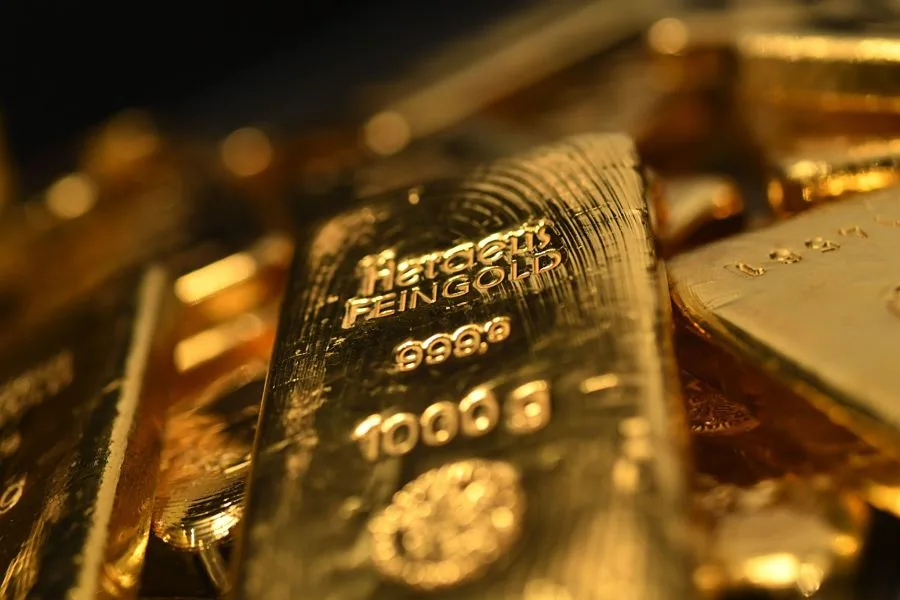
Silver bars from 1 oz to 1,000 oz qualify for IRA inclusion when produced by an approved refiner at 0.999 fineness and stamped with weight, purity, and serial number. Bars offer lower premiums over spot price compared to government-minted coins, making them cost-effective for larger silver IRA allocations.
Common IRA-Eligible Silver Bar Sizes
- 1 oz bars — Highest per-ounce premium but maximum flexibility for partial liquidation and in-kind distributions.
- 5 oz and 10 oz bars — Popular mid-range option balancing premium savings with reasonable position sizing for required minimum distributions (RMDs).
- 100 oz bars — Significantly lower premiums over spot price; preferred by investors making large silver IRA allocations. Standard COMEX deliverable size.
- 1,000 oz bars — Industrial-grade COMEX/LBMA deliverable bars. Lowest premiums but impractical for most individual IRA investors due to size and in-kind distribution challenges.
Every IRA-eligible silver bar must carry clear hallmarks identifying the manufacturer, exact weight, purity (0.999 or higher), and a unique serial number. Bars from PAMP Suisse, Johnson Matthey, Engelhard, Sunshine Minting, and Valcambi Suisse are among the most widely accepted by IRA custodians. Bars without proper hallmarks, generic bars from unaccredited refiners, or bars that have been altered or re-stamped do not qualify.
Silver Rounds: Eligibility Rules and Custodian Variations
Silver rounds are privately minted coins that carry no legal tender status, distinguishing them from government-issued bullion coins like the American Silver Eagle. Despite this distinction, some custodians accept silver rounds for IRA inclusion provided two conditions are met: the round must be 0.999 or finer in silver purity, and it must originate from an approved manufacturer — typically a refiner accredited by the LBMA, COMEX, NYMEX, or ISO 9000.
Unlike government mint coins, silver rounds are not standardized across custodians. One custodian may accept a 1 oz round from a major LBMA-accredited refiner while another rejects all rounds on principle. Before purchasing silver rounds for a self-directed IRA, request written confirmation of acceptance from your custodian and verify that the specific product — including manufacturer name and purity marking — appears on their approved product list. This step prevents a disqualified investment, which the IRS treats as an IRA distribution subject to income tax and potential 10% early withdrawal penalties under IRC §72(t).
Rounds make sense when Silver Eagle premiums spike above 25% over spot and when 1 oz or 10 oz bars are unavailable in your target position size. Sunshine Minting rounds with the MintMark SI security feature are among the most commonly accepted rounds by IRA custodians.
What Silver Does NOT Qualify for an IRA
IRC §408(m)(3) excludes sterling silver, numismatic coins, commemoratives, jewelry, and any silver below 0.999 fineness — the IRS classifies each as a collectible and treats their inclusion as a prohibited transaction.999 fineness are categorically ineligible for IRA inclusion under IRC §408(m)(3). The IRS classifies these items as collectibles under IRC §408(m)(2), and holding a collectible inside an IRA constitutes a prohibited transaction.
| Product Type | Typical Purity | IRA Eligible? | Reason for Exclusion |
|---|---|---|---|
| Sterling silver items | 0.925 (92.5%) | NO | Below 0.999 fineness threshold |
| Coin silver (pre-1965 US) | 0.900 (90%) | NO | Below 0.999 fineness threshold |
| PCGS/NGC graded coins | Varies | NO | Classified as collectibles under §408(m)(2) |
| Commemorative coins | Varies | NO | Classified as collectibles |
| Silver jewelry | Varies | NO | Not bullion; classified as collectible |
| Silver-plated items | <0.100 | NO | Not solid silver; fails all criteria |
| Bars from unaccredited refiners | May be 0.999 | NO | Manufacturer not LBMA/COMEX/ISO approved |
Most IRA custodians reject graded or PCGS/NGC-slabbed coins because IRC §408(m)(2) classifies them as collectibles, disqualifying them from retirement accounts. Even if the underlying coin meets the 0.999 purity standard, the grading and encapsulation transforms it into a collectible in the eyes of the IRS.
Disqualified persons and prohibited transactions: The IRS treats you, your spouse, your ascendants/descendants, and entities you control as disqualified persons under IRC §4975. A disqualified person cannot buy, sell, lease, or extend credit to the IRA — doing so triggers a prohibited transaction that disqualifies the entire account. Silver IRAs generating unrelated business taxable income (UBTI) through leveraged purchases or active trading must file Form 990-T and pay tax at trust rates, so most silver IRAs hold bullion outright to avoid UBTI exposure.
Is a Silver IRA a Good Investment in 2026?
Silver IRAs make the most sense for investors who already hold a core allocation to stocks and bonds and who want a non-correlated hedge against inflation and currency risk. Over 1990–2025, silver delivered roughly 4–6% annualized returns with sharp drawdowns — underperforming equities over long horizons but outperforming cash in high-inflation years such as 1979–1980, 2008–2011, and 2020–2022.
Silver-to-Gold Ratio: A Timing Signal
The silver-to-gold ratio (ounces of silver per one ounce of gold) historically averages around 65:1. Ratios above 80:1 — such as the 100:1 reading in March 2020 — have marked structural silver lows; readings below 50:1 have marked tops. Many allocators use the ratio to tilt between metals inside a precious-metals sleeve.
Spot Price, Premium Over Spot, and Futures Curve
IRA-approved silver trades at a premium over spot price that varies by product: 5–8% for 1,000 oz COMEX bars, 8–15% for 10 oz and 100 oz Sunshine/Johnson Matthey bars, 18–28% for American Silver Eagles, and 25–45% for fractional rounds. The futures curve also matters: contango (futures above spot) signals abundant physical supply, while backwardation (futures below spot) signals tight physical demand and often precedes spot-price rallies.
Pros and Cons at a Glance
| Pros | Cons |
|---|---|
| Inflation and dollar-debasement hedge | 25–35% annualized price volatility |
| Industrial demand floor (solar, EVs, electronics) | Storage + custodian fees reduce net return |
| Tangible, no counterparty risk | No dividends, interest, or cash flow |
| Portfolio diversification (low correlation to S&P 500) | High premiums over spot on small-unit products |
In 13 years advising self-directed IRA clients, the most common sizing mistake I see is concentrating 40–60% of the retirement portfolio in silver during a price rally — then watching a two-year drawdown erase the gains. Treat silver as a hedge sleeve, not a core holding.
Storage Rules: IRS-Approved Depositories
IRS-approved depositories such as Delaware Depository, Brinks, and CNT Depository must hold your silver IRA assets — home storage is a prohibited transaction under IRC §4975. The IRS requires that all precious metals in a self-directed IRA remain in the physical custody of a qualified trustee or custodian, which in practice means a third-party depository.
Segregated vs. Commingled Storage
IRA investors choose between two storage models:
- Segregated storage: Your specific silver coins and bars are stored separately, individually identified, and returned to you upon distribution. Higher annual fees ($150–$300/year typical) but you receive the exact items you purchased.
- Commingled (non-segregated) storage: Your silver is pooled with other investors' metals of the same type and purity. Lower fees ($100–$200/year typical) but you receive equivalent items — not necessarily the exact pieces you originally purchased.
Why Home Storage Is Prohibited
Despite marketing claims from some promoters, storing IRA precious metals at home — even in a personal safe or home-based LLC — constitutes a prohibited transaction under IRC §4975. The IRS and U.S. Tax Court (McNulty v. Commissioner, 2021) have consistently ruled against home storage arrangements. Consequences include:
- The entire IRA balance treated as a taxable distribution in the year the violation occurs
- Ordinary income tax on the full distribution amount
- 10% early withdrawal penalty if under age 59½
- Potential accuracy-related penalties under IRC §6662
Always use an IRS-approved depository operated by an established custodian with proper insurance, vault security, and regular audits.
IRS-Approved Depositories: Delaware, Brinks, IDS of Texas
Custodians contract with specialized vault operators to physically hold IRA bullion. The four depositories below handle the bulk of U.S. precious-metals IRA silver:
| Depository | Location | Notes |
|---|---|---|
| Delaware Depository | Wilmington, DE | CME/COMEX-approved; Lloyds-insured; oldest U.S. IRA depository |
| Brinks Global Services | Salt Lake City, NY, LA | Global armored logistics; used by Equity Trust and STRATA |
| IDS of Texas | New Castle/Dallas, TX | Class-3 vault; CME-approved; all-risk Lloyds insurance |
| A-Mark Global Logistics | Las Vegas, NV | Subsidiary of A-Mark Precious Metals; often lower storage fees |
Segregated vs. Commingled Storage
Segregated storage keeps your exact coins and bars separated in a labeled compartment — when you take an in-kind distribution, you receive the same serialized bars you purchased. Fees typically run $150–$300 per year. Commingled (non-segregated) storage pools your metals with other IRA holders’ silver of identical type and fineness; you own a pro-rata interest and receive equivalent (not identical) pieces on distribution. Commingled fees run $100–$180 per year. For investors planning an eventual in-kind distribution at retirement, segregated storage eliminates any dispute over which physical units belong to the account.
How to Open a Silver IRA: Rollover and Transfer Guide
Opening a silver IRA involves selecting a custodian, funding via direct rollover, 60-day indirect rollover, or annual contribution, then directing the custodian to purchase eligible silver. The process typically takes 5–10 business days from account opening to metal purchase.
Step 1: Choose a Self-Directed IRA Custodian
Select a custodian that specializes in precious metals IRAs and is authorized to hold physical bullion. Key factors include fee transparency, approved product breadth, depository partnerships, and customer service reputation. Read reviews, verify BBB ratings, and compare at least three providers before committing.
Step 2: Fund Your Silver IRA
Three primary funding mechanisms exist:
- Direct rollover: Funds transfer directly from your existing 401(k), 403(b), TSP, or IRA to your new SDIRA custodian. No tax withholding, no 60-day deadline. This is the safest and most common method.
- Indirect rollover (60-day rule): You receive a distribution check from your current plan and must deposit the funds into your new SDIRA within 60 calendar days. Miss the deadline and the entire amount becomes a taxable distribution. Limited to one indirect rollover per 12-month period across all IRAs.
- Annual contribution: Fresh contributions subject to IRS limits — $7,000 in 2025 ($8,000 for ages 50+ with catch-up contributions). Contribution limits are adjusted periodically for inflation.
Step 3: Select and Purchase IRA-Eligible Silver
Once funded, direct your custodian to purchase specific silver products from an authorized metals dealer. The custodian reviews each purchase for IRS compliance before execution. Purchased metals are shipped directly to the approved depository — never to your home address.
Step 4: Ongoing Management
Monitor your silver IRA like any retirement account. Review annual custodian statements, track the spot price of silver relative to your cost basis, and plan for required minimum distributions (RMDs) if you hold a traditional IRA.
Silver IRA Costs: Custodian, Storage, and Dealer Fees
Silver IRA investors typically pay a one-time setup fee ($50–$150), annual custodian fee ($100–$300), and annual storage fee ($100–$200) for segregated or commingled storage. Understanding the full fee structure is critical because fees directly reduce net returns.
| Fee Type | Typical Range | Frequency | Notes |
|---|---|---|---|
| Account setup fee | $50 – $150 | One-time | Often waived by top providers |
| Annual custodian/admin fee | $100 – $300 | Annual | Flat fee or % of account value |
| Segregated storage | $150 – $300 | Annual | Your specific items stored separately |
| Commingled storage | $100 – $200 | Annual | Pooled with same-type metals |
| Wire transfer fee | $25 – $50 | Per transfer | Applies to incoming/outgoing wires |
| Dealer markup (premium over spot) | 3% – 15% | Per purchase | Varies by product type; coins > bars |
When evaluating providers, calculate total first-year cost (setup + custodian + storage + purchase premiums) and ongoing annual cost. Some companies offer fee-free first years or waive setup fees for larger initial investments. A buy-back program from your dealer can also reduce liquidation costs when you eventually distribute from the IRA.
Tax Implications: Traditional vs. Roth Silver IRA
A traditional silver IRA provides tax-deferred growth with required minimum distributions (RMDs) starting at age 73 under the SECURE 2.0 Act; a Roth silver IRA offers tax-free growth with no RMDs, subject to income eligibility limits.
Traditional Silver IRA
- Contributions may be tax-deductible depending on income and employer plan coverage
- Growth is tax-deferred — no taxes on gains until distribution
- Distributions taxed as ordinary income at your current tax rate
- RMDs begin at age 73 (SECURE 2.0 Act); failure to take RMDs triggers a 25% excise tax
- In-kind distribution: you can receive physical silver, but the fair market value on the distribution date is taxable
Roth Silver IRA
- Contributions made with after-tax dollars — no upfront deduction
- Qualified withdrawals (after age 59½ and 5-year holding) are completely tax-free, including all growth
- No RMDs during the owner's lifetime — assets can grow indefinitely
- Income limits apply: 2025 MAGI phaseout begins at $150,000 (single) / $236,000 (married filing jointly)
- Particularly advantageous if you expect higher tax rates in retirement or significant silver appreciation
Roth Conversion Strategy
Investors with traditional IRAs can convert to a Roth IRA, paying income tax on the converted amount now to enjoy tax-free growth and distributions later. This strategy can be especially valuable during years with lower taxable income. Consult a tax professional to model the breakeven point for your specific situation.
2026 Contribution Limits, RMDs, and IRS Forms
2026 Contribution Limits
| Account Type | Under 50 | Age 50+ (Catch-Up) |
|---|---|---|
| Traditional or Roth Silver IRA | $7,000 | $8,000 |
| SEP Silver IRA | 25% of comp, up to $70,000 | Same |
| SIMPLE Silver IRA | $16,500 | $20,000 |
RMDs and In-Kind Distribution
Traditional silver IRAs require RMDs starting at age 73 (or 75 under SECURE 2.0 for those born in 1960+); Roth silver IRAs require no RMDs during the owner’s lifetime. Because silver is illiquid, many retirees take an in-kind distribution — the depository ships specific bars or coins directly to the beneficiary, and the fair market value on the distribution date counts as the taxable amount on Form 1099-R. RMD calculation tables (Uniform Lifetime, Joint Life) apply identically to metals IRAs.
Forms You Will See
- Form 5498 — reports contributions and year-end fair market value (filed by custodian every May).
- Form 1099-R — reports distributions, including in-kind bullion withdrawals.
- Form 990-T — only required if the IRA generates UBTI (rare for bullion-only silver IRAs).
Keep the beneficiary designation on file current — silver IRAs pass outside probate directly to named beneficiaries, and stale designations override wills under federal ERISA-successor rules.
Building a Balanced Precious Metals IRA Portfolio
Many investors combine gold and silver inside a self-directed IRA to diversify among metals with different market dynamics. Gold coins, gold bullion bars, and platinum coins that meet minimum fineness can complement silver bullion to spread risk across metals with varying industrial demand profiles and historical price correlations.
A common allocation approach uses gold as the core stability holding (60–70% of precious metals allocation) with silver providing growth potential and industrial demand exposure (20–30%), and a small allocation to platinum or palladium (5–10%) for additional diversification. However, the optimal allocation depends on your risk tolerance, time horizon, and overall portfolio composition including paper assets.
Silver tends to be more volatile than gold, with larger price swings in both directions. During precious metals bull markets, silver often outperforms gold on a percentage basis — a phenomenon known as the gold-silver ratio compression. Conversely, silver can underperform during bear markets. Balancing multiple metals helps smooth returns over time while maintaining exposure to precious metals as an asset class.
A qualified financial advisor can help you align metal allocations with your broader retirement strategy, considering factors like Social Security timing, pension income, and paper asset holdings in other accounts.
Compliance Checklist and Documentation Requirements
Because the IRS sets specific rules under IRC §408(m), maintaining compliance requires ongoing attention. Use this checklist to protect your IRA-approved silver:
- Custodian: Work with a qualified IRA custodian authorized to hold physical precious metals in a self-directed IRA structure.
- Product eligibility: Only purchase silver coins, bars, or rounds that meet the 0.999 minimum fineness requirement and originate from approved manufacturers or a national government mint.
- Proof coins: Keep proof coins in original mint packaging with certificates of authenticity. Avoid third-party grading (PCGS/NGC slabbing) for IRA-held coins.
- Storage: Store all bullion at an IRS-approved depository. Never take personal possession or use home storage arrangements.
- Documentation: Retain all purchase invoices, serial numbers, certificates, and custodian statements. These records support IRS compliance during audits.
- Contribution limits: Observe annual IRA contribution limits ($7,000 / $8,000 catch-up for 2025) and rollover rules (60-day rule, once-per-12-month limitation for indirect rollovers).
- RMDs: If holding a traditional silver IRA, plan for required minimum distributions starting at age 73. Calculate RMD amounts based on the fair market value of silver on December 31 of the prior year.
- Tax reporting: Ensure your custodian files Form 5498 (IRA contributions) and Form 1099-R (distributions) as required.
Top-Rated Silver IRA Custodians (2026)
Augusta Precious Metals, Goldco, and American Hartford Gold are among the highest-rated silver IRA custodians based on BBB ratings, fee transparency, and customer reviews. Below is our editorial comparison of the top providers for 2026, evaluated on publicly available data including BBB accreditation, published fee schedules, and verified customer review platforms.
Compensation Disclosure: This page contains affiliate links. If you open an account through a link on this page, we may receive compensation. This does not affect our editorial assessments or rankings, which are based on publicly available data including BBB ratings, fee structures, and verified customer reviews.
Key Takeaways: What Is IRA Approved Silver
IRA-approved silver must be 99.9% pure (0.999 fineness), sourced from approved manufacturers or a national government mint, stored in an IRS-approved depository, and administered by a qualified IRA custodian under a self-directed structure — as defined by IRC §408(m)(3).
The most commonly accepted IRA-eligible silver products are American Silver Eagles, Canadian Silver Maple Leafs, Austrian Silver Philharmonics, and hallmarked silver bars from LBMA-accredited refiners like PAMP Suisse, Johnson Matthey, and Valcambi. Silver rounds from approved manufacturers may qualify but require written custodian confirmation.
Sterling silver, numismatic coins, commemoratives, jewelry, graded/slabbed coins, and any silver below 0.999 fineness are categorically ineligible. Home storage of IRA silver is a prohibited transaction under IRC §4975 with severe tax consequences.
By understanding the IRS fineness requirements, approved manufacturer standards, custodian fee structures, and rollover mechanics outlined in this guide, you can confidently build a compliant silver IRA that supports portfolio diversification, potential inflation protection, and tangible asset security within your retirement strategy.
- Minimum purity: 0.999 fineness
- Legal authority: IRC Sec. 408(m)(3)
- Storage: IRS-approved depository only (Delaware, Brinks, CNT)
- 2026 contribution limit: $7,000 ($8,000 if 50+)
- Most accepted coin: American Silver Eagle
- Home storage: PROHIBITED